Friday, October 11, 2013

"The Children’s Hour" Synechode

“The fictional Mademoiselle de Maupin, from Six Drawings Illustrating Theophile Gautier's Romance Mademoiselle de Maupin by Aubrey Beardsley, 1898”

What critics and New Yorkers are willing to accept in a play and what producers feel a general audience will be ready for are not always the same thing. The Children’s Hour, Lillian Hellman’s 1934 drama is a prime example. The show, complete with overt (albeit nameless) references to lesibianism, was a huge success in New York, running for over two years, while at the same time it was banned in both Boston and Chicago. While the New York success was chalked up to masterful writing, superb cast, etc, it was also certainly a function of the controversial subject matter and accompanying sense of taboo.
This relationship between stigma and commercial success seems in some ways to be an illustration of Michel Foucault’s theory of discursive explosion. If we were really so concerned with censoring sexuality, why the extreme proliferation of discourses surrounding the topic? And why the overwhelming popularity and fervor with which we consumed, and continue to consume them? That lesbian sexuality is a police matter within The Children’s Hour seems to support this theory.
But THAT is a topic for another day. Today, I want to look at the ways that The Children's Hour was censored for a mass audience in the 1936 film adaptation, These Three, and, the (perhaps not so mysterious) way that Hellman seems to have actually prophesied this event within the very pages of play.  
For those who are not familiar with the work, the play takes place at a girl’s boarding school run by two young women, Karen and Martha. Striving for financial independence, the women pour their life savings into converting an old farm house into a school. (There are of course feminist undertones to the relationship these women have to labor, certainly another source of the play’s notoriety in 1934...) So anyway, one inexplicably bitter young pupil, Mary, decides to seek revenge for punishment and lie to her wealthy grandmother, claiming that Karen and Martha are lovers. (Of course she never says this explicitly, but finds a thousand ways to imply it. Discursive explosion!)
We are supposed to believe that Mary gets the idea for this lie by overhearing a heated conversation between Martha and her aunt, who accuses her of being jealous of Karen’s relationship with her fiance, Joe. However, there is another more oblique way that Hellman implies Mary may have learned of lesbianism. The girls of the school, it turns out, have been circulating a certain bawdy book, as girls are wont to do in boarding school. The novel is Theophile Gautier’s Mademoiselle de Maupin. Rather than paraphrasing my extremely limited knowledge on this subject, I leave it to the authorities of Wikipedia:
Check out Theophile Gautier’s cool hat!
Mademoiselle de Maupin (1835) In September 1833, Gautier was solicited to write a historical romance based on the life of French opera star Mlle Maupin, who was a first-rate swordswoman and often went about disguised as a man. Originally, the story was to be about the historical la Maupin, who set fire to a convent for the love of another woman, but later retired to a convent herself, shortly before dying in her thirties. Gautier instead turned the plot into a simple love triangle between a man, d'Albert, and his mistress, Rosette, who both fall in love with Madelaine de Maupin, who is disguised as a man named Théodore. The message behind Gautier's version of the infamous legend is the fundamental pessimism about the human identity, and perhaps the entire Romantic age. The novel consists of seventeen chapters, most in the form of letters written by d'Albert or Madelaine. Most critics focus on the preface of the novel, which preached about Art for art's sake through its dictum that "everything useful is ugly. "http://en.wikipedia.org/wiki/Th%C3%A9ophile_Gautier#Novels
And so Gautier translated a radical queer life (and a totally badass one- she stole the body of a dead nun, put it in her lover’s bed, and then set the convent on fire so they could escape together?!) into a bawdy, phallocentric novel. (Note: I don’t mean to discount the political currency of crossdressing, or furthermore the exciting implications of a male homosexual gaze issued towards a crossdressing lesbian in an 1835 novel, but this certainly does shift the focus…away from the convent and the woman in it, for example...right…? Is it a stretch to say that this adaptation would have been a comfort compared to Maupin’s real life, insofar as it renders lesbian existence somewhat dependant on masculinity, and masculine presentation?)
One hundred years later, Hellman’s quietly political lesbian drama was translated into a similarly simple love triangle, into Karen and Martha fighting over the same dude…. (It apparently took even less in the mid-twentieth century to scare an audience than in the mid-nineteenth. Which period was more repressed again?)
I believe the word is synechode, when a part of something refers back to the whole. The novel, adapted from a subversive historical source, seems in some ways to preemptively reference the adaptation of Hellman’s play into These Three. When read this way, the small but essential role that the novel plays in the action of the play feels almost like a wink from Hellman.


Works Cited

"Theophile Gautier." Wikipedia. N.p., n.d. Web. 11 Oct 2013.

"Julie d'Aubigny." Wikipedia. N.p., n.d. Web. 11 Oct 2013.


Saturday, October 5, 2013

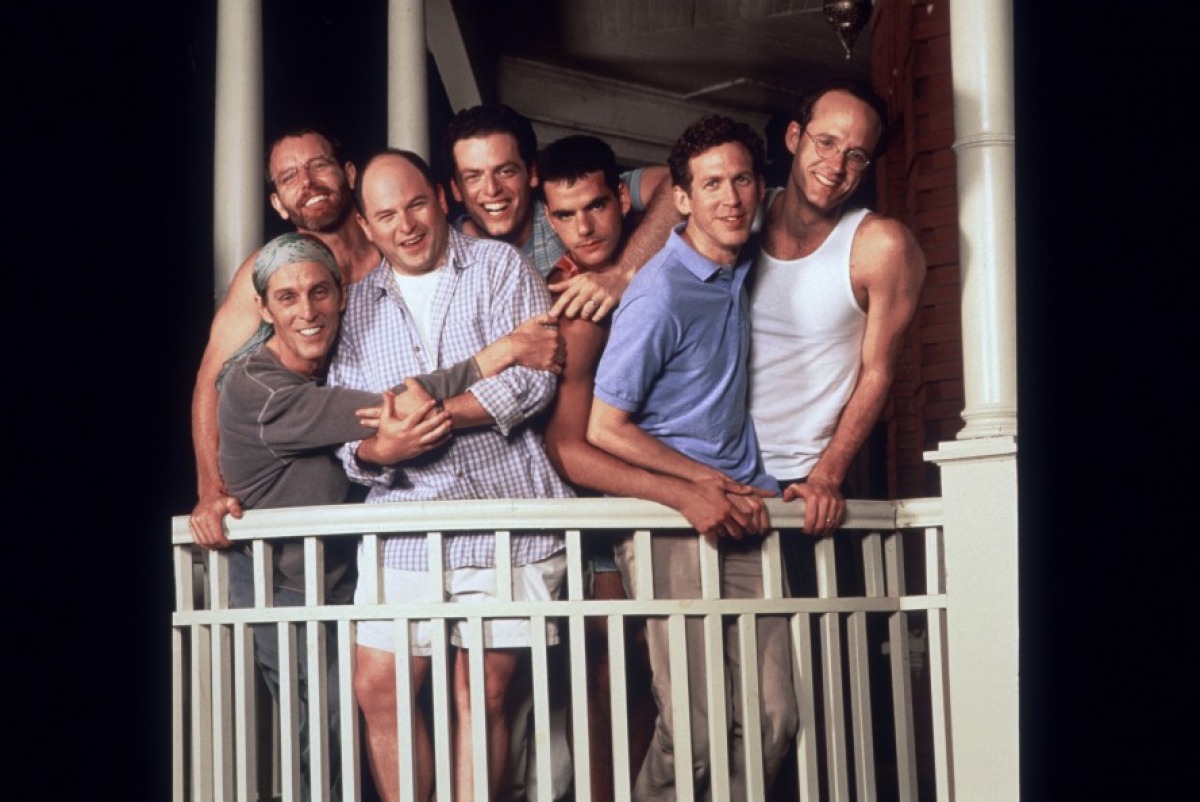
Feeling Backward about "The Boys in the Band"


What counts as political in the contemporary context is...out of touch with the longer history of queer experience. Rather than disavowing the history of marginalization and abjection, I suggest that we embrace it, exploring the ways that it continues to structure queer experience in the present. Modern homosexual identity is formed out of and in relation to the experience of social damage. Paying attention to what was difficult in the past may tell us how far we have come, but that is not all it will tell us; it also makes visible the damage that we live with in the present. (29)


-Heather Love, Feeling Backward: Loss and the Politics of Queer History, (emphasis mine)


There is something about The Boys in the Band that I find distinctly heartbreaking. This experience of heartbreak is a complicated one. Frankly, it’s not all bad. In fact, there is a distinct pleasure, a satisfaction in this version of catharsis. As I watched William Friedkin’s 1970 film adaptation of Mart Crowley’s play on my laptop recently, my pulse quickened, I got goosebumps, the tingling-neck-feeling of watching something important. This physical sensation was in direct contrast to the spinning wheels of my analytical mind, busy accounting for all the problems with this deeply flawed text.

This is a play built on a bed of tokenism. Stop me if you’ve heard this one before: a Black queer; a nelly queer; a passing queer; an ugly, Jewish, queer nihilist; a poor, alcoholic, queer sociopath; a non-monogamous cheating queer; a closeted queer; a gorgeous, hustling, teenaged queer; and one forgettable queer get together for this birthday party…. First there’s a dance number. Then they get drunk. Then they all yell at each other and cry.


A "Heatwave" on Fire Island

I can hardly imagine what it must have felt like to be a gay man and watch this play in New York in 1968. The tokenism and recycled plot may have felt like a small price to pay for the chance to see something, anything, of oneself in a proud, public capacity. For those who weren’t lucky enough to live in New York City with its bars and back-rooms and bathhouses, to see the film at a Midwestern movie theatre 1970 might have been even more mindblowing. The value of this audacious claim to visibility, to legitimacy, is not in question. The question, of course, is what we are to do today with a film that proudly demands visibility for a bunch of toxic, self-hating men we would perhaps rather forget.  

While it may be tempting to dismiss Boys as backwards or counter-productive, I believe that to forget the boys would be a mistake. Somehow, despite the problematic aspects, for me the emotional core of this text remains intact, and perhaps more importantly, remains incredibly relevant. Underneath the flimsy scaffolding this is a play about the insidious nature of internalized homophobia. It is about shame. And furthermore, shockingly, the play seems concerned with revealing not only the redemptive power of community, but also the very real, at times physical danger of belonging to a community that hates itself. In other words, Boys acknowledges the empty, violent, and enabling potentialities of a community born of self-hated, fed on booze. And I might add that it does so several decades ahead of its time.

Many depictions of queer culture that my generation is likely to be familiar with tend to favor the progress narrative of “look how far we have come” and “never go back.” This is a project that requires depictions of affirming, thriving, supportive communities. While I’m not here to argue that there is something wrong with depicting such communities, to completely deny or eclipse a painful history seems to me misguided.

Queer Eye for the Straight Guy: "things just keep getting better"

In her 2007 book Feeling Backward, Heather Love explores the difficult question of how a marginalized group can navigate a past filled with shame, depression, regret, isolation, and violence. The challenge, she writes in the introduction to her book, “is to engage with the past without being destroyed by it” (1). While her central argument is one concerning queer literature that she sees as having a “backwards” relationship to modernism (Walter Pater, Willa Cather, Radclyfe Hall, and Sylvia Townsend Warner, for example) her approach seems particularly helpful when considering the troubling aspects of Boys.

Love sees early LGBT critics dismiss negative representations of queer life, those that paint “same-sex love as impossible, tragic, and doomed to failure” (1). She goes on, “texts or figures that refuse to be redeemed disrupt not only the progress narrative of queer history but also our sense of queer identity in the present” (8). In other words, it would be easy enough to dismiss a text like Boys as internally homophobic, as a relic that refuses to be redeemed, that has little value for us other than as a distant marker of how far we have come. Put simply, such a text implies an unfortunate past, but one we have moved past. To be positioned within a progress narrative, Boys can only be seen as a starting place, as that which is wrong and false, that which is no more.

The timing of Boys within this progressive narrative is truly remarkable, and may shed some light on why so many have dismissed the text as irredeemable. Debuting off-Broadway in April, 1968, this play was both produced and consumed in a pre-Stonewall climate. (Again, the visibility must have been thrilling.) Love, along with most scholars, sees the 1969 riot as a turning point, as the beginning of the progress narrative, of the “never go back” mentality. She writes, “the emergent field’s powerful utopianism, affirmation of gay identity, and hope for the future resonated with the seemingly magical power of this new movement to transmute shame into pride, secrecy into visibility, social exclusion into outsider glamour” (28). Imagine then, in the center of this utopian energy, a film that demanded its viewers reflect on just how bad things have been, and perhaps more importantly, to consider the implications of that not-so-distant past...

At worst it may feel like a slap in the face, at best perhaps a distinctly heartbreaking experience, but it remains as true today as it was in 1970: “Paying attention to what was difficult in the past may tell us how far we have come, but that is not all it will tell us; it also makes visible the damage that we live with in the present” (29).


Works Cited

The Boys in the Band. Dir. William Friedkin. Cinema Center Films, 1970. Web.

Love, Heather. Feeling Backward: Loss and the Politics of Queer History. Cambridge, MA: Harvard University Press, 2007. Print.


Sunday, September 29, 2013

What I Think I Might Know About Queer Theatre: An Introduction

“I think theater is primarily a big mirror that can be held up to the community. In that reflection we can see a set of potential road maps to new sites where liberation stories yet-to-be-told can flourish” (xvii). 
-Tim Miller, Introduction to Body Blows: Six Performances

My task in this first blog post is to introduce myself as a scholar of queer performance: a not uncomplicated task. What do I know about this topic, anyway? What do I think I know? As I grapple with how to approach this question, I find myself wondering if queer drama really exists as a monolithic, recognizable thing. Perhaps what can be said to be universal about queer drama is actually that which is universal about drama.


First some background, and then an example. When I was an undergraduate in Madison, Wisconsin, I spent a lot of time thinking about this topic. It was a perfect storm, really. I was immersed in a dynamic gender and women's studies department and had recently learned what a dramaturg was.


My senior year I worked as a dramaturg for an MFA acting candidate on his thesis project, a one man show about gay male identity. We created the show together from fragments of existing plays, texts, and monologues. The idea was that by piecing together these moments, some of them quite famous (Shakespearean sonnets, text from the Oscar Wilde obscenity trials, The Laramie Project, etc.) into something resembling an arc, we could say something about this particular actor’s experience as a gay man, and also gesture towards something universal about the gay male experience.


One thing I think I now know, in retrospect, is that there is no such thing as a universal gay male experience. (Duh.) On the other hand, I think I know that there is something universal about fear, and also about hope, two emotions that seem to undergird a lot of the queer theatre that I am familiar with.


My MFA actor was amazing to work with, generous and open to collaboration. We generated a preliminary reading list, and I dove in. I started with plays that he considered classics of his generation; plays that were important to him when he came out; plays I had never heard of. I got a crash course in Harvey Firestein, Paul Rudnick, and Terrence McNally, to name a few.


This is one version of queer theatre that I think I know: realist dramatic comedies (comedic dramas?) concerning the trials and tribulations of (mostly white) (all male) queer folks in the large urban centers of the 80s and 90s.


From the film adaptation of McNally's Love! Valour! Compassion! (1997)


These powerful plays felt almost like artifacts to me. There was a certain sense of nostalgia as I read them, I suppose for an imagined past, both familiar and distant. This imagined past seemed to me to be filled with fear (of isolation, of violence, of AIDS) but also with hope (for change, for visibility, for community.)


Sometimes I would suggest material too. One of my contributions to the show was Tim Miller (of NEA 4 fame.) I can't remember where I "got" Miller, but by this time I already loved him... His solo performance pieces were funny and heartbreaking and sexy and weird. The piece we ended up using was from Buddy Systems. It's called "Liebestod on Hollywood Boulevard." In the piece Miller describes an early sexual experience that leaves him feeling depressed and alone. He finds himself wandering the streets, eventually following a crowd into the Hollywood Bowl and watching a Wagner opera...


He describes being a part of this huge crowd, watching the soprano sing. I love this section from the end:


And this thing started to happen-- this inspirational art-changes-life-thing. Which later, when you get older and become too smart for your own good, you start to think is some kind of big joke. But then it had form and craft and power. It had a role to play in the universe and it was gonna happen to me!

Tim Miller (left) and John Bernd in Live Boys (1981)


Maybe this quote feels relevant because it continues to hint at what might be “universal” in queer theatre. Even in a piece markedly different in tone and form from those described above (although I should note still white and male in perspective…) the magnetic poles of hope and fear still make the world of Buddy Systems turn. The physical movement on stage, the move away from fear and isolation is the movement of an individual, but also the movement of a crowd filing into the Hollywood Bowl. It is the space created by art, the transcendent experience of this opera, the “form and craft and power” that makes Tim Miller feel like he is a vital part of the universe. And maybe we can say the same thing about the experience of watching Tim Miller perform, or watching a play by Firestein, Rudnick, or McNally...   


In other words, change, visibility, community, hope can all be functions of (queer) theatre, and that is something I am happy to know.


Works Cited


Miller, Tim. Body Blows: Six Performances. Madison: University of Wisconsin Press, 2002.


MIller, Tim. “Buddy Systems.” 1001 Beds: Performance, Essays, and Travels. Madison: University of Wisconsin Press, 2006.